
Eric Le Blanc
Musings
Lumpers, Splitters, and Open Positions

Once upon a time, in a state far, far away, I worked in a drug store. At the time, people bought a lot of greeting cards, so we would often have customers ask for our help in finding the particular occasion they were looking for. Need the get-well cards? They’re right over here. Funny cards? Just on the other side.
Easy question—simple, cheerful answer. Everyone goes home happy. But here’s the thing—that’s not good enough for homo sapiens. That’s the greeting card tutorial. Meet the greeting card Boss: “Where are the Happy Parole Uncle Chester and Good Luck with the New Dental Implants cards?” I exaggerate but little. Somewhere deep in the heart of the species lurks something that seeks absurd levels of specificity.
Think of it as a forest and trees sort of problem. For a short time, I managed a brilliant guy who was a refugee from a prominent consulting firm. I wish I were as smart as this guy is. I had a hard time understanding him and struggled to get the results from him I needed. After a time, I realized what the problem was. In his entire life, he had never seen a forest. Place him in a forest, and he saw a tree. And he’d quickly become an expert on that tree. Leave him there a while, and he’d discover another tree. In time, he would see every tree in that forest—but he would never see the forest.
Philosophers call this the problem of the universal and the particular. (SMH) Those philosophers. When I was in college, we had better nomenclature: the lumpers and the splitters. Faced with a forest, I see a bunch of trees and never understand how they represent a greater whole. Splitter. Or, faced with a bunch of trees, I see a forest with no perception of diversity and nuance. Lumper. Each extreme has its own particular vice (a little bit of Aristotle to pepper into your next cocktail party conversation). Today, I am making fun of splitters because…it’s their turn.
Every morning Chad shows up at the shop and walks around the building to make sure everything is secure and as it should be. He unlocks the door and props it open to let the fresh air in. He turns on the light and starts a pot of coffee, into which he adds a bit of chicory. He checks the various machines to make sure they have power and have the appropriate safety equipment in place. Next, he goes to the office, turns on the light, and sits down in a swivel chair to review the day’s production schedule.
What does that job description look like?
Shop Superintendent
Key Responsibilities—
Needs to be experienced in facility circumnavigation.
Must be proficient with locks and air circulation.
Expected to have experience with illumination equipment.
Chicory experience a plus.
OSHA certification required.
Experience with rolling and rotating furniture expected.
I don’t know what kind of OSHA certification there may be for the fictional shop, but whatever appropriate safety training is required, that should be an important part of the job description. However, most of the rest of these other elements elevate parts of the job into discreet requirements of the job. We take these parts and invest them with their own training, experience, and demonstrated competence that almost becomes comical. Almost.
Chad does his thing every morning, and it makes perfect sense. But, what Chad is really doing is getting the shop ready for the day, and using his own habits or mental checklists to get that done.
Looked at another way:
Shop Superintendent
Looking for a responsible person to ensure that the shop is safe and ready for daily operations. Must show genuine concern for the safety and welfare of fellow team members. Demonstrated attention to detail is critical.
Clearly, I’ve made a straw man of both the splitter and the lumper job descriptions. But here’s the point: we get caught up in stipulating the specifics of a job, and, if we’re not careful, we don’t get what we really want: a guy who knows the importance of making sure a shop is ready to operate. What’s the difference between Shop A to Shop B? Different equipment, different processes. But I’m guessing that being responsible and detail-oriented is more important than finding someone who has used the Le Blanc Defabrolator or the ACME Goofalator (barring some major difference in complexity, perhaps).
I used to have the following hiring criteria:
- Honest
- Curious
- Plays well with others
Of course, no HR department is going to let you write a job description when you talk like that. Looking back on it, maybe that’s where it all went wrong.
I’m a lumper. Except for when I’m a splitter. But I think when I consider assembling a team or filling a position, I’m a lumper. What is essential to the position vs what is accidental? The essential, maybe, is someone with an eagle eye for what can go wrong and the conscientiousness to own making sure it doesn’t. What machine, how big the shop, or the atmospheric pressure is accidental. Just like the software we use or a management process we follow. If you can pick up on one, chances are pretty good you can pick up on another. Either way—lumper or splitter—you can have a bad hire. But, it’s a lot easier explaining your bad hire if you can point out that they checked all the boxes. That’s understandable, but it’s also playing not to lose.
Phrases I like to see in job listings:
- Must be curious
- Must be good with ambiguity
- Good at collaboration
- Knows how to build a cohesive team
A lot harder to pin these down, but they’re probably more important than some of the other qualifications.
Just get the Congratulations card, address it to Uncle Chester, and wish him a good parole. The dental implants are going to go fine.
[The chicory in the coffee thing comes from one of my brothers who has been in the AA program for something like 40 years. I used to go with him to open meetings sometimes to try to be supportive. I don’t know if your average person in the program knows fine coffee, but they sure drink a lot of coffee, and they liked his because he put chicory in it. This might be your only AA tip today.]
The 5% and the 95%

There are a few movies from the time when my children were young that we all look back on with affection and enthusiasm. Any quote from Cool Runnings or The Princess Brideis, even today, to be instantly recognized and riffed upon. One of our favorites is a somewhat less famous film called Secondhand Lions. Our favorite scene is when a young boy asked an old man if all of the fantastic stories he’s heard are true. The old man’s answer is (I paraphrase): What does it matter if the stories or true or not? Some things are the things that you believe in because they are the things worth believing in. The point is, there is truth, and there is Truth. Sometimes True things come wrapped in a story that is less than true.
So, I jump ahead to a story I have heard told in a variety of ways and sometimes claimed as true, and sometimes not. But it’s a great story and, in my opinion, smacks of Truth.
During the Korean War, it is said that the Chinese would sort their prisoners of war into two groups. This sorting was not done by rank, but according to the leadership qualities any given POW exhibited. Those who showed leadership were placed in one group, and they were kept under high-security conditions. The second group was: everybody else. The first group, those who showed leadership qualities, comprised about 5%-10% of the POW population. The balance, 90%-95% of the POWs, was kept under minimum security conditions.
There was not a single successful escape from a Chinese POW camp during the Korean War.
So the story goes. Is it true? Who knows. What does it matter? It’s almost certainly True.
Consider that all the POWs shared a common condition—shared a common need: they were imprisoned in a Chinese POW camp and wanted to escape. They shared a common solution set. There is no suggestion that the 95% were less intelligent, or less creative. There’s no reason to believe that the same escape plans were not hatched in both groups. The difference between the 95% and the 5% came down to the execution of the idea. The 5% had to be physically prevented from executing their escape plans. For the 95%, the thing that prevented them from executing an escape plan was internal, not external. There was no need to prevent the 95% from escaping.
I’m told that as the world of film was changing, when competitors brought innovations to market, people at Kodak often said something like, “Yeah, we had that.” They had the intelligence and the creativity to develop the innovation, but somehow, they lacked the drive to execute. Kodak’s competition didn’t have to be smarter or more creative—they just had to execute. They didn’t even have to execute better or faster—they just had to execute. Something in the DNA of Kodak meant that, time and again, there was some internal obstacle to launching innovative products that anticipated where the market was going. External restraint was not necessary.
Imagine a company where you could shop at brick and mortar stores for a wide variety of products, or, you could order those products without ever going to a store, and you could have them delivered right to your door. That company was Sears. They didn’t lack the idea. It would probably be fair to say that the infrastructure that allowed Amazon to take hold and prosper was not in place until after Sears had weakened to a point where it could not have reinvented itself. Maybe. But when did Sears stop trying to solve the needs of its customers who wanted to be able to order products without entering the store?
I think it would be crazy for organizations to think they just need to hire people from the 5% group. It would, in any case, be extremely difficult. Intelligence and creativity are found in the 95%, and it would be foolish to overlook the many, many contributions that are found in the 95%. And there is an ugly elitism that forms when an organization fixates solely on the 5%. They are the doers, the achievers, and nothing gets done without them. We reward them with compensation and career advancement because they make it all happen.
Maybe the right way to look at the 5% is that they are necessary, but not sufficient. Remember that in the Korean War example, the Chinese were still able to neutralize the leaders, and in a way that seems to have been pretty easy. The genius of the Chinese was in separating these two groups so that each could be defeated in the most appropriate manner.
The 5% did not succeed in escaping, either. The 5% are not morally better than the 95%. The 5% may or may not deserve higher compensation or more opportunities for advancement. Intelligence, creativity, goodwill, collaborative spirit: all of these are found in the 95% as well. Strength and success accrue to organizations that unite the efforts and talents of their 5% and their 95%. A culture that devalues the 95% risks losing the intelligence and creativity that resides there. A culture that claims to value everyone but only rewards the 5% is dooming itself to the fate of the 5% in the Chinese POW camps. They didn’t escape either.
Is the Korean War story true? I don’t know. Is my representation of Kodak accurate? I don’t know. But I just can’t help believing that they are True. I choose to believe them because it’s something worth believing in.
What’s a Supermarket For?
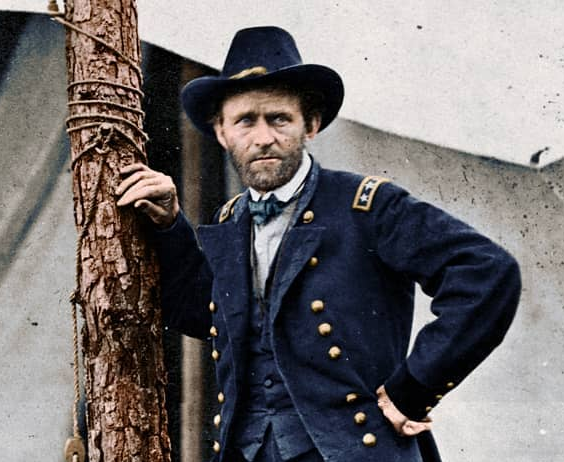
There’s a great story from the American Civil War where the usually even-keeled General Ulysses Grant was asked by one of his staff officers, “What do you think General Lee means to do?” It is said that General Grant became irritated and answered, “Oh, I am heartily tired of hearing about what Lee is going to do. Some of you always seem to think he is suddenly going to turn a double somersault, and land in our rear and on both of our flanks at the same time. Go back to your command, and try to think what are we going to do ourselves, instead of what Lee is going to do.”
When I go to the supermarket, I make my way among the many, many carts pushed by store employees, filling online/pickup orders, and wonder whom this business aims to serve. By the volume of carts being filled, there is no question that there is demand for the online order/pickup service. But it begs some interesting questions.
Offering this service out of regularly operating stores (as opposed to dark stores) has a major negative effect on the shopping experience. It can feel as though the number one obstacle to being able to navigate the store and access the products you want to buy is store employees. Now, I’m a simple guy, but it seems to me that giving customers a reason to dislike shopping your store might just be a bad idea.
Let’s look at the other side of the proposition. By having a robust online ordering business a store may be gaining or retaining business that might have gone to another outlet. Nobody likes to see that happen either. As I look at that business, I’m left wondering a few things. Have retailers captured all of the incremental costs associated with their online ordering program? I don’t know, but I am feeling a little skeptical. Retailers don’t have the margin to create costs without off-setting them, so I wonder if there is a shoe to drop and where it will make contact with the floor. If you spread the costs across the entire business, doesn’t that risk a premium price perception and possibly a sense that in-store customers are subsidizing out-of-store customers? And, if the transaction to order online comes down to a functional user interface, accurate order fill, and easy pick-up, haven’t we transformed an in-store shopping experience that could, in principle, be differentiated and an online experience that may be too easily replicated? What is the loyalty of the online shopper vs the in-store shopper? What is the average size of purchase or order frequency? Is there a segment of shoppers who visit one store for online orders and a different store when they shop inside (maybe because they don’t like shopping when all of the carts are in the way)? Is that a good trade for the retailer?
The drive to nurture the online business is driven by competitive pressures or anticipated competitive pressure from other business models. That makes sense enough. But how much energy should a retailer invest in trying to be another business model? Maybe the right answer is to consider your value proposition to your customers. How do you make it so the experience of being in your store is such that you can attract customers to what you are: a supermarket. What is a supermarket? A place where you can access 40,000 SKUs right now. A place where you can gain inspiration for meal ideas. A place to engage in a social experience, so many of us were denied during the pandemic. It just seems like an odd thing to do to degrade your core value proposition to second-guess what General Lee is going to do. Maybe we should just worry about what we’re going to do.
Is the online bordering model sizable, enduring, and worth figuring out? Of course.
Is degrading the shopping experience a good idea? Of course not.
I keep coming back to the questions that might help us make better decisions about these competing models:
What is the value of the in-store shopper vs the out-of-store shopper?
What are the trade-offs in terms of potentially lost impulse sales?
What are the implications for loyalty as retailers try to balance these service and value propositions?
I think there are some basic category management-type questions that need to be answered before anyone decides, “I have to be this because they’re going to be that.”
Let’s not be unduly swayed by what we imagine competitors may do. Let’s use our understanding of our competitors to help us refine our value proposition and execute that.
Nautical Metaphors

Metaphors. In business, we love sports metaphors (think Al Capone’s baseball speech in The Untouchables), and we love military metaphors. I suppose that has a lot to do with historical gender bias in business management. I’ve been guilty of using both and seem to be downright addicted to a few in particular. But the metaphors and images that I like best are nautical ones.
I think that as a tribe we behave in ways that are counter-productive and, at times, dangerous. The image I keep in my mind is of a ship where somebody calls out that there is something to starboard, and everyonerushes to the starboard side of the ship. As a consequence, the ship begins to list to starboard. In response to the list, everyone on the ship dashes to port, and the ship, in turn, begins to list to port. Back to starboard.
Examples? How about when Tesco came to the US with its Fresh and Easy concept that was going to completely disrupt American food retailing. If you remember this as anything less than panic, you don’t remember it clearly. How many American executives flew across the Atlantic to see British/European products and packaging, spawning lots of frenetic activity that didn’t go anywhere. “They are so far ahead of us in Europe.” That’s a really strange thing to say. It’s a very normative thing to say. Let’s try again: The habits and attitudes of Americans differ in significant ways from those of the Europeans and therefore require different solutions. Nope. Someone screamed Tesco and all hands to Starboard.
It’s really a matter of applying a little critical thought whenever you hear everyone saying the same thing. You might think of it as Conventional thought vs contrarian thought. Here’s a blast from the past: remember when everyone was blown away by Blue Apron? Why didn’t more people think about the difference between adoption and retention? All hands to port. Sodium. Trans-fat. Pick your favorite.
Based on some experiences I’ve had in the prepared foods area in deli, I have heard a lot about all of the “brown food” that makes up most of the assortment. Fair enough—the industry ought to be thinking very seriously about the right assortment to optimize reach. But let’s take a moment to think about the quick service segment in foodservice. Is anyone able to think of wildly successful concepts or menu items that are “brown food?” I’m not taking a position on it either way, I’m just pointing out that an awful lot of “brown food” is sold out there, and it probably makes sense to consider the existing audience and the desired audience and consider their preferences.
Here are a few others:
· Clear the scuppers. Scuppers are the cutouts at the sides of the ship at deck height. The purpose is to allow water that comes onto the deck to flow off the deck as quickly as possible. Water on the deck raises the center of gravity of the boat and, in worst-case scenarios, can lead to capsizing. When a captain knows he is headed into weather, he orders, “Clear the scuppers.” Heading into weather, it’s a certainty that you’ll catch white water over the bow. Get all extraneous stuff out of the way, so the water clears. In your business, you know you’re headed into a difficult time or situation. You can’t avoid it. What do you do? Clear the scuppers. Get all extraneous crap out of the way. Tighten up your priorities, lose distractions and focus on the matter at hand. Clear the scuppers.
· Proceed at flank speed. We’re all familiar with the expression, “Full speed ahead!” That order directs the crew to proceed at 100% of the ship’s capacity. There are times, however, when 100% is not good enough. Then there’s flank speed. That’s proceeding at greater than 100% of capacity. It gets a ship out of immediate danger, but it is inefficient and unsustainable. In business, we know what full speed looks like. I think we even know what flank speed looks like. There are times we need to proceed at flank speed to get through a dangerous situation. We need to know how to do that. But let’s remember that it is inefficient and unsustainable.
· Fair winds and a following sea. This is what we wish for ourselves and our mates: Favorable conditions to move forward on our planned path and to make good speed. When you don’t get fair winds and a following sea, you have to adjust your plans. You may want to head East, but in a storm, you can’t allow yourself to take waves abeam (on the side of the ship). That’s a good way to capsize. You must either take the waves on your bow or on your stern. That may mean that your plan to head East just got modified. You need to head North, for example, until the seas allow you to resume your course to the East. In its business application, that means that we’ve got a plan—a plotted course, but sometimes external circumstances dictate that we change course. We’re not abandoning our destination, but we are adjusting our course because that is the safe and prudent thing to do. An inflexible commitment to the plotted course is insanity, not commitment. Adjust course, keep the crew safe, don’t lose focus on the destination, and come about when you can. There’s nothing admirable in capsizing and losing the crew.
My best wishes for fair winds and a following sea.
Thinking about Today’s Inflation Numbers
Remember The Armchair Economist?
Steven Landsberg, a professor of Economics, wrote this book in 1993 (can’t really be 29 years ago, can it?). If you haven’t read it, think of it as a forerunner to Freakonomics (now celebrating its 17th birthday). I have always remembered a passage in The Armchair Economist in which Prof. Landsberg tells of an economist friend of his who, when asked what interest rates were going to do, would become thoughtful, steeple his fingers, nod sagely, and pronounce, “I think interest rates will…fluctuate.”
I’m not an economist, I don’t even play one on TV (in the event that you do not know, the original source for that saying was a commercial from 1986). (1986!) But I would like to venture some ill-informed thoughts on the inflation numbers that came out today.
As reported in CNN: “Inflation surged in June, with US consumer prices jumping by 9.1% year-over-year. Much of the June increase was driven by record-high gas prices.” Inflation is obviously a concern and Fed actions certainly reflect that, but I’d still like to unpack this a little bit.
Consumer prices have jumped 9.1%. We’ve all been watching the year-over-year number since January, and I think we can all agree that’s a number that should give us pause, especially when looking at the preceding months. The media like to report numbers that have a certain shock value—it’s the business of news. 9.1% inflation is a great attention grabber, and it happens to be 100% accurate (unless USBLS revises it, which won’t move it much, anyway). It’s a really good grab when your subhead indicates that this number is the worst in 40 years. Business of news aside, that’s a serious number.
Much of the increase was due to record high gas prices. Yeah, Energy inflation YOY is 41.6% (yikes!) with gas (all types) up 59.9% YOY. That increase is driven by gas prices certainly checks out. If you’re in the media biz, then this number is a gift. People are jumpy about gas prices, they see it at the pump, so it has immediacy, and has got to help with capturing the eyeballs. And, again, it’s perfectly true. But maybe worth a closer look.
Gas prices in June hit $4.55 per gallon. Compare that to the July 2008 number of $4.11 and we are in record territory. It might be worth remembering that those are nominal prices and the comparison does not take into consideration that 14 years have passed since then. On an inflation-adjusted basis, the 2008 number is $5.48 per gallon, which means that, in real terms, gas is still a buck cheaper than in 2008. So…record territory? Sort of?
And here’s why I shouldn’t have written the last paragraph and why it is (mostly) irrelevant. In terms of impact on consumer behaviors, the real number vs nominal number doesn’t matter. The thing that drives consumer behaviors is their perception of that number, and other CPI inputs as well. From a media perspective, touting gas prices as the highest ever may color that perception. A bigger factor, however, is probably that consumers at the gas pump don’t have to stretch their memories very far to get to when gas was about $2.00 less per gallon. I think there’s solid basis for consumer perception that gas prices are high.
But how are consumers shifting spending decisions right now? How does that compare with what they did in 2008? (An uncomfortable tangent: during the great recession, one of the categories that saw decreased sales was: diapers. Who saw that one coming?) What are our best guesses as to what they might do in the future? (I believe consumers’ behaviors will…vary).
Fewer trips. Probably means lower impulse purchases because there will be fewer purchase occasions. Outlet choice is more likely to be influenced by proximity and/or the ability to source more of the consumer’s total needs from one visit. That sounds like good news for mass and club and maybe bad news for specialty stores. It almost assuredly means that consumers will visit fewer outlets—reducing the number of providers in their portfolio.
That’s all pretty intuitive, but there’s a devil lurking in the details: who are we looking at when we talk about changing behaviors? From a retailer perspective, which are the shoppers I most want to retain? What are their behaviors? Do they vary by demographics and region (spoiler alert, they do)? Does satisfaction with the shopping experience at a retailer drive outlet selection? Among certain consumer segments, it sure seems to.
Depending on which retailer you are, and who you most want to retain as customers, a price play may be less strategic than a shopper satisfaction play. Thet’s not the lever that gets pulled first most of the time.
Big, aggregated numbers mask important details. Rather than getting into a panic because of national, or even regional, numbers, it’s more important to answer the most basic questions: who am I to my shoppers? In a time when tough choices need to be made, which shoppers are critical to me (and the answer, all of them, is a non-answer). What are the tactics that YOUR shoppers (the ones that are critical to you) are using in a time of change? Rather than fighting those behaviors, how can you adjust your value proposition to reflect your shoppers’ needs?
The great news is that the exercise in the preceding paragraph should be the most fundamental in determining a retailer’s go-to-market strategy regardless of how inflation…fluctuates.
Lies, damned lies…you know the rest
We’ve all heard the quote: There are three kinds of lies: lies, damned lies, and statistics. Wikipedia, which can never be wrong, tells me that the quote I thought was from Mark Twain was indeed popularized by him, but he credited it to Benjamin Disraeli. I’ve always liked the progression in severity: lies are a grievous thing, which produce anger and demand a response. Damned lies, I gather, are something that leads to an altercation of sorts (a brouhaha, a kerfuffle, fisticuffs, or similar rarely used words). Beyond this realm somewhere exists statistics (for which I am going to substitute data).
Data sin number one: Just making stuff up. I’m trying to tell a story, there’s a point that I think is intuitive or have heard often enough that I take it as a fact. This is so unsophisticated and unethical that I don’t want to spend time on it. No professional would engage in this, would they?
“Today’s consumer is time-starved and demands convenience.” Consumer of what? What is the condition of being time-starved and what is the benefit of its being mitigated? What in God’s name does ‘convenience’ mean? To whom? Under what circumstances? Just say it—it sounds good, no one will contradict you, and it’s a great substitute for thought.
Defensive strategy: “You know, I hear that a lot. Do you know where that comes from?”
Data sin number two: Cherrypicking! Cherrypicking is something other people do. They scour data looking for something that confirms their bias or supports the story they want to tell (the thing they want to sell). This isn’t necessarily a misrepresentation of fact—after all, they are citing a legitimate data point, but it’s obviously a ‘curation’ of the data that is maybe guilty of sins of omission rather than sins of commission.
This is common and shows up in the best of organizations. Part of it, I think, is the need to make a nice PowerPoint and move on. Senior executives bear some of the responsibility for this, as well. Confronted with a great deal of information, and faced with pressing decisions, senior management needs concise information (do you suppose they’re time-starved? ). The downside of ‘concise’ is that nuance is lost. As a point of humor, I was once presenting to senior management and explained that the data I was presenting ran counter to conventional wisdom because it was more nuanced. A chuckle spread across the room, not because of the word itself, but because it was so unusual to be discussing nuance. I hasten to add that these were very bright and talented executives. I think they were just time-starved.
Defensive strategy: “What else did your study say about x?”
Data sin number three: Misinterpreting indexes. This is so common that it might be funny, were it not for the fact that targeting decisions are sometimes made on the basis of this very simple error. It goes like this: Among a segmented group, attribute x is far more likely to purchase than any other segment—thus, they should be the target. Nobody bothered to check that attribute x is only 0.6% of the population. Before I care about a group of people who are more likely to buy, I’d want to know how many of them were out there, how often they buy, and how much they buy.
Admittedly, this should not happen with any competent analyst. Everyone knows better. But it can still turn up in surprising places.
Defensive strategy: “How large is that segment (percentage of my customer?) How often do they shop my store? How often do they buy? How much do they buy?
Data sin number four: Counting the wrong noses. The data that is easiest to find and easiest to collect is often general population data. As long as whatever you’re measuring lines up well with that population, then this might be fine. For example, if my population is supermarket shoppers, a highly shopped category might be a good fit for using gen pop numbers. What about when it’s not? I once worked on a product where somewhere around 1% of supermarket shoppers accounted for 80% or so of product sales. If you want to understand packaging, form, etc., for this product, why would you ever ask gen pop or total shopper population? What I cared about was what the 1% thought about any prospective change. That’s basic, right? Any competent researcher will consider the right population for a study. Keep your eyes peeled and you’ll see this sin in surprising places, too.
Defensive strategy: “Who was in this study? Why did you choose that group for the study?”
Data sin number five: Not being curious. This sin is, I believe, the most common and is the reason that most of the value of any research study or syndicated data is lost (according to me). Even if no one is just making stuff up, cherry-picking, misinterpreting the data, or getting the population wrong, the greatest sin is not asking the why question enough times.
Sales of a given product or category are down. Why isn’t the consumer buying as much as they were?
- I wonder how the sales change varies by retailer? By region? By price relative to competitors in market? By in-store execution?
- How does the change in sales at a given retailer correlate with the satisfaction of shoppers in that category at that retailer?
- Is fuel a factor? Higher gas prices may result in fewer trips, leading to fewer purchase occasions. If this is so, how else is fuel affecting consumer decision-making?
- Is there a reason to believe that whatever change is taking place is permanent? Since COVID there has been an endless stream of predictions relative to “the new normal.” How many of those predictions can be substantiated by data over time?
- What factors may cause future changes in market performance: are there input price increases that have not been brought to market yet? Do we expect those input cost increases to be temporary, and if so, of what duration?
Is it possible to get analysis paralysis by going down the rabbit hole? Sure. Is it important to your business? Probably worth a deeper look. What is the business decision that will be driven by the data? If that decision may yield a significant competitive advantage, it’s probably worth a longer look.
Defensive strategy: My Marketing Godfather, Bob Salegna, taught me many years ago to ask two questions: “Why?” and “How do you know that?”
This list of data sins is certainly not exhaustive but maybe it provides food for thought, whether you’re conducting research or consuming it. We like to say that knowledge is power, and yet, we often fail to extract the value of research that we have on hand to do the one thing we intend for it to do: to give us information that no one else has so we can drive business decisions that transform our business.
To put it another way, An insight is not an insight until somebody makes a buck off of it.
No post yet.
 Eric LeBlanc